

The modern workplace is evolving at lightning speed, driven by advancements in technology, shifting employee expectations, and the global rise of hybrid work models. Among the innovations reshaping office environments, Smart Interactive Boards have emerged as game-changers. More than just digital whiteboards, these devices combine touchscreen technology, real-time collaboration tools, and integration with productivity apps to transform how teams brainstorm, present, and communicate.
In today’s article, we’ll explore the role of smart interactive boards in shaping the future of work, why they are becoming essential for hybrid offices, and how they foster creativity, productivity, and inclusivity.
The Shift Toward Smarter Workspaces
Workplaces are no longer static environments where employees sit at desks and attend traditional meetings. Instead, modern organizations are adopting smart workplaces designed to enhance communication, creativity, and collaboration.
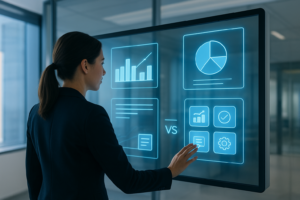
Smart Interactive Boards are central to this transformation because they bridge the gap between in-office and remote employees, ensuring everyone has an equal seat at the table. By integrating features such as real-time annotations, cloud-based storage, and AI-powered functions, these boards make meetings more engaging and productive.
What Are Smart Interactive Boards?
At their core, Smart Interactive Boards are large touchscreen displays equipped with collaborative software. Unlike traditional projectors or whiteboards, these boards allow users to:
- Write, draw, and erase digitally with styluses or fingers.
- Share screens and documents instantly.
- Record meetings and store notes in the cloud.
- Connect with tools like Zoom, Microsoft Teams, and Google Workspace.
Their interactive nature transforms meetings from one-way presentations into dynamic, two-way discussions.
Why Smart Interactive Boards Are Revolutionizing Meetings
Meetings have often been criticized as time-wasters. But with smart interactive boards, organizations can flip that narrative. Because smart interactive boards offer:
- Enhanced Engagement: Participants can interact with content rather than passively watching.
- Remote Inclusivity: Remote employees can collaborate in real time, reducing communication silos.
- Time Efficiency: Notes, annotations, and decisions are instantly saved and shared, streamlining the overall business process automation within meetings.
- Visual Creativity: Brainstorming becomes more dynamic with visual mapping, sticky notes, and diagramming tools.
Instead of leaving meetings with half-remembered conversations, teams walk away with clear, actionable outcomes.
Smart Interactive Boards in Hybrid Work Environments
Hybrid work is here to stay. Employees expect flexibility, and businesses are rethinking traditional office layouts to accommodate both in-person and remote workers.
Smart interactive boards solve one of the biggest challenges of hybrid work: seamless collaboration across locations. Imagine a designer sketching ideas on the board in the office while their remote teammate contributes annotations from a laptop at home. Both see updates in real-time, eliminating delays and confusion.
This level of connectivity is not only practical but also fosters inclusivity—ensuring no voice gets left behind.
Applications Across Different Industries
Smart interactive boards aren’t limited to tech companies. They’re transforming workplaces across various industries:
- Education: Virtual classrooms and hybrid learning benefit from interactive teaching tools.
- Healthcare: Doctors can collaborate on digital patient charts and medical imaging.
- Finance: Teams can analyze complex data visually during strategy sessions.
- Architecture & Design: Real-time sketching, prototyping, and blueprint sharing enhance creativity.
- Government & Public Services: Virtual town halls and community meetings become more engaging.
Benefits of Smart Interactive Boards in Workplaces
1. Boosting Collaboration
Collaboration is no longer confined to conference rooms. With smart boards, employees from different time zones can brainstorm, annotate, and share insights seamlessly.
2. Improving Productivity
Every second counts in today’s business landscape. Smart boards streamline processes by eliminating setup delays, integrating directly with apps, and automatically saving progress.
3. Enhancing Creativity
From mind maps to design sketches, visual collaboration encourages out-of-the-box thinking.
4. Eco-Friendly Advantage
By reducing the need for paper handouts and printouts, smart boards support sustainable workplace practices.
5. Training & Development
Interactive training sessions keep employees engaged, making learning more impactful.
The Future Outlook: AI and Smart Boards
The next evolution of Smart Interactive Boards will be powered by artificial intelligence (AI). Future boards are expected to feature:
- Voice Recognition & Transcription: Automatically capturing meeting notes.
- Smart Suggestions: AI-generated ideas and brainstorming prompts.
- Language Translation: Breaking down barriers in multilingual teams.
- Data Analytics: Tracking engagement and productivity in meetings.
These advancements will not only make workplaces smarter but also give companies a competitive edge.
Challenges in Adoption
Like any new technology, implementing smart boards isn’t without hurdles:
- High Costs: Initial investment can be significant for small businesses.
- Learning Curve: Employees may need training to use advanced features effectively.
- Integration Issues: Compatibility with existing systems must be ensured.
However, as technology becomes more affordable and intuitive, these challenges are gradually diminishing.
Smart Interactive Boards: A Must-Have for Future-Ready Workplaces
In a world where agility and collaboration define success, Smart Interactive Boards are more than just tools—they’re workplace enablers. By combining technology with human creativity, they transform static offices into dynamic ecosystems where ideas flow freely and teamwork thrives. Companies that embrace smart boards today are not just investing in technology—they are investing in the future of work.
Conclusion
The workplace of the future is not about where we work, but how we work. Smart Interactive Boards are paving the way for more connected, engaging, and productive workplaces. By empowering teams with collaborative tools and future-ready technology, organizations can stay ahead of the curve and unlock their true potential.